Illuminating the Future: Lighting Trends for 2026
Lighting shapes how we feel in a space—its mood, its comfort, and even how well it functions. As we move into 2026, staying on top of new lighting trends can help both professionals and homeowners create spaces that feel fresh, welcoming, and beautifully lit.
Here’s a look at key trends that will define the year ahead and elevate everything from a cozy living room to a polished commercial environment.
SMART LIGHTING
Smart lighting has come a long way, and is now easier to use and far more affordable than systems of the past.
In fact, in 2026, many off-the-shelf bulbs, dimmers, and plugs will be “smart ready,” operating like traditional outlets, bulbs, and plugs, but with built-in capabilities that allow users to control lights remotely, set schedules, and adjust their colors/levels the minute they’re ready to use those features.
And these smart devices aren’t just convenient—they’re energy‑savvy too, helping to reduce power consumption by shutting things off when they’re not needed, and adjusting light levels throughout the day to keep things balanced, efficient, and comfortable.
Most mass-market smart products are also now designed to integrate seamlessly with digital home assistants that many families already have, like Alexa or Google Home.
By connecting lights and controls from many brands in one place, it’s now easier than ever to create a connected, responsive, and beautiful lighting experience.
SUSTAINABILITY
We’re seeing that sustainability is remaining a major driver in lighting design, but perhaps not in the way that you think.
While LEDs continue to lead the way thanks to their long lifespan and impressive energy efficiency, their advancements have also opened the doors for materials that don’t need to resist the high heat that used to be given off by old incandescent or halogen sources.
That means that natural materials, 3D printing, and adaptive reuse are all possibilities with modern light fixtures.
We expect to see more releases using raw, natural materials like grass, bamboo, and even wax to diffuse light, and more one-of-a-kind handcrafted components using plaster, resins, and carved wood for fixture bodies. And while we’re all for craft and experimentation, always look for UL listings to ensure that every fixture is held to the highest standards for safety and performance.
EXPRESSIVE VS INVISIBLE DESIGN
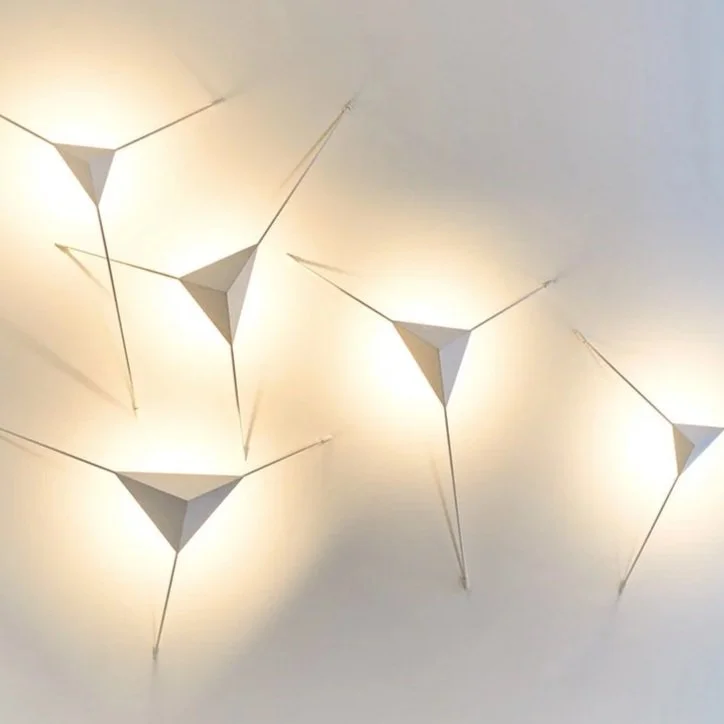
With the flexibility of LED technology, lighting fixtures are becoming true design statements or practically invisible to the discerning eye.
We’re seeing more sculptural, extraverted pieces in 2026—fixtures that don’t just light a room but blur the line between fixture and art piece. Organic shapes inspired by nature, delicate clusters of tiny LED elements, and bold, oversized, expressive forms will all take center stage with the upcoming winter and spring releases.
These designs will allow us to bring personality and uniqueness into a space, and as advances in manufacturing make many older designs more affordable (think knock-offs or designer dupes), we’ll see leaders in the industry push the envelope even further, making lighting an even more expressive focal point rather than an afterthought. Think haute couture instead of ready-to-wear.
Speaking of which, lines are also continuing to expand their customizability, offering designers more options where extreme scale, custom colors, and lighting effects might be needed. Not only does it guarantee that each piece fits a space perfectly, but also that it’s truly one-of-a-kind.
And while these focal pieces are designed to draw attention, others, again using LED technology, are designed to illuminate but not be seen; the holy grail of no-glare technology sought by every professional lighting designer.
The newest fixture releases include miniaturized forms that allow installation where otherwise impossible, whether pinpoint lights the thickness of a layer of drywall (perfect when a beam gets in the way of perfect placement), or high-output tapes that can tuck under stair treads or into crown molding to provide the perfect wash of light.
LIGHTING ACROSS EVERY SPACE
The best lit spaces utilize multiple sources of illumination, something you’ll often hear as “light layering.” LED technology, with its low power consumption, long life, and small form factor, has opened up a lot of doors for designers, and they’re taking up the challenge of finding new ways to incorporate light into every spot within a space, inside or out.
We’re seeing greater adoption of toekick lighting in kitchens and bathrooms to provide a subtle wash of light on floors or nightlighting that doesn’t shock you awake.
We also expect to see more use of inset wall lighting beyond traditional sconces, micro-pendants instead of bedside table lamps, and hidden recessed tracks that allow for pendants, downlights, or gallery spotlighting without the clunkiness of old-fashioned track systems.
Let’s also not forget the warmth and twinkle of accent lighting, whether tucked in a bookcase, used as a picture light, or as a subtle glow on a dining room buffet.
This “third” layer of light has always been the best way to round out a flattering lighting scheme, and is made easier with advances in battery technology since fixtures don’t need a nearby outlet. Not only that, but they can pull double duty by following you outside, whether on tabletops or as cordless floor lamps that last all night, rain or shine.
There’s a lot to look forward to this year as all major manufacturers release new technology, captivating new form factors, and more design options flexible enough to meet every aspect of your life, whether hosting at home, enjoying a cozy night in, or energizing days at work.
Looking to incorporate these trends into your space? Arrange a complimentary consultation with us today.