Why We Hate LEDs
We’ve all been there. You walk into a friend’s house and immediately squint. A cocktail party feels strangely tense, and everyone looks a little…off. Maybe the living room’s six recessed lights are all different colors, or the outdoor post light is so bright it feels like it belongs in a parking lot instead of at someone’s front door.
IT’S NOT YOUR EYES. IT’S THE LEDs.
When LED bulbs became affordable, they also came with something totally new: different “colors” of white light. Incandescent bulbs never gave us that choice, so suddenly we were staring at boxes labeled “bright white,” “soft white,” and “daylight,” trying to guess what any of it meant. And since we think of daylight as warm and sunny, the labels didn’t help.
Then we brought those “daylight” bulbs home… and got blasted with harsh, bluish light that made everything, and everyone, look terrible. Even worse, many of us mixed different types without realizing it since we generally replace one bulb at a time, and the result was a room that looked more chaotic than it did before with burnt-out bulbs.
But here’s the good news: once you understand a few basics, LEDs are fantastic. They last for ages, use very little energy, stay cool to the touch, and allow for beautiful fixture designs that were never possible before.
IT’S ALL ABOUT COLOR TEMPERATURE
The magic phrase to remember is color temperature—basically, the color of the light the bulb gives off. Think of it like fire: a low color temperatures are like candlelight, warm and golden. A high color temperature is like the flame from a jet engine—bright, bluish, and intense.
Color temperature is measured in Kelvin (K), and you’ll find it listed on almost every LED bulb box. A 2700K bulb gives you that cozy, traditional glow of a classic 60‑watt bulb. A 4000K bulb is much cooler and mimics the bright light you see outdoors at midday.
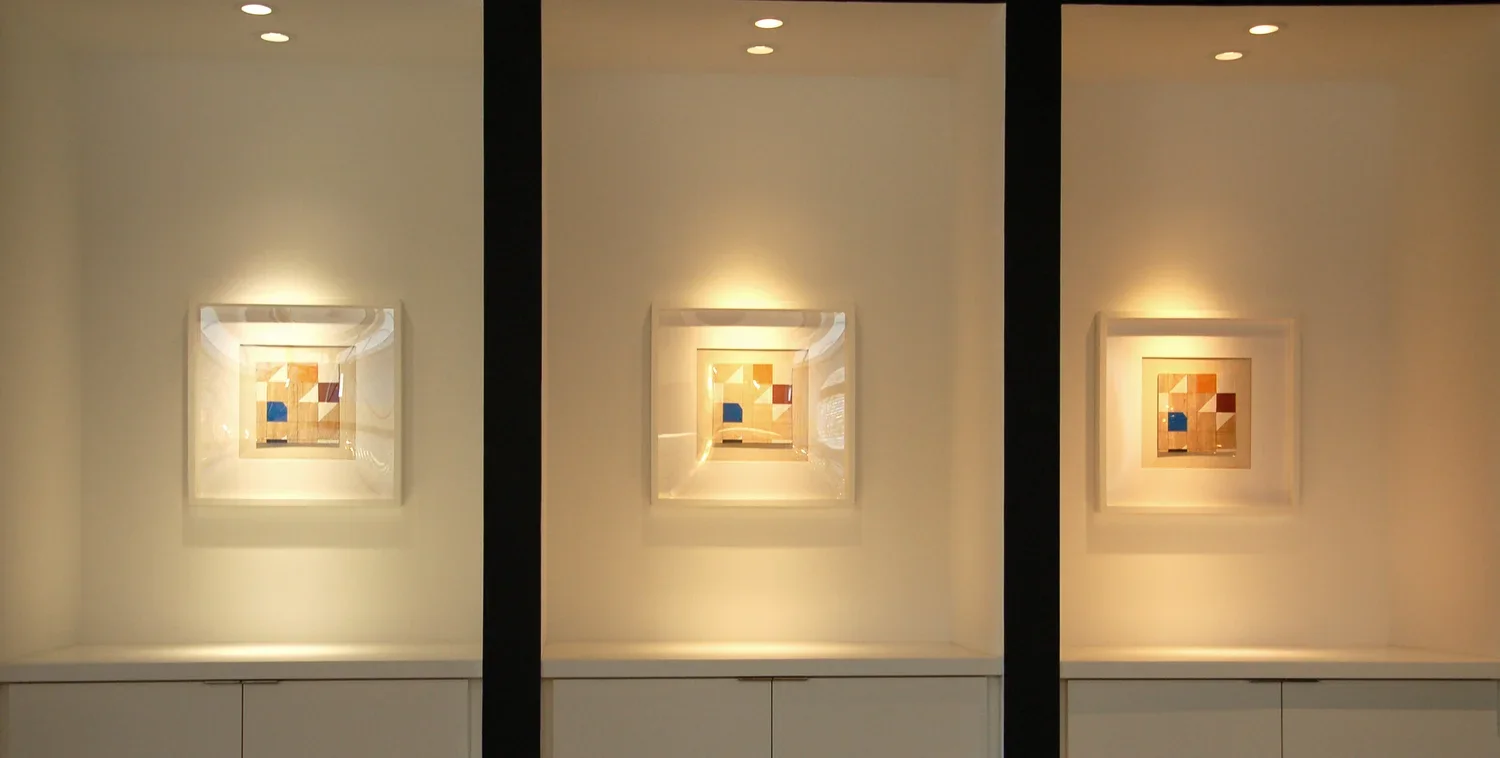
Three common LED color temperatures, starting from left: 3500k, 3000k, 2700k
WHAT SHOULD I USE AT HOME?
For most residential spaces, we recommend 2700K or 3000K. Here’s why: you use your lights most in the evening, when natural light is already warm and golden (think sunsets). Matching that tone feels relaxing, looks great on skin, and—most importantly—signals to your body that it’s winding-down time.
Yes, the wrong color of light doesn’t just look bad. It can actually mess with your sleep.
Cool, bluish light absolutely has its place—but that place is a warehouse, convenience store, or office, where you want to feel alert and energized.
Still skeptical? Remember that light affects moods, and a mismatch between the color of light and the time of day will immediately feel off-putting and shocking. Convenience stores, fast food restaurants, and gas stations intentionally use high color temperature lighting, naturally seen at midday, at night. Aside from safety, they most certainly don’t want you feeling comfortable. They want you in and out as quickly as possible.
So if you want your spaces to feel comfortable and welcoming, and you want your guests to stick around, lower color temperatures are key. In fact, hospitality environments and super-high-end spaces opt for even lower color temperatures around 2000k. Specialty, color-tunable, and “warm dim” bulbs all offer this ultra-warm, ultra-flattering color if you want to try it out in your space.
Used well, LEDs are incredible—and your home will look and feel better for it.
Looking to conduct a lighting audit for your space? Drop us a line, and we’ll be happy to set up a complimentary consultation.